From 4 to 11 August 2026, a team from our group travelled across Peninsular Malaysia under the SJTU Global Challenge Program 2026 with the project “Muon imaging for non-destructive testing: a cross-border geological survey”. Led by Kim Siang Khaw, the team of 11 students from six SJTU schools, including TDLI and the School of Physics and Astronomy, visited Penang, Ipoh, Kuala Lumpur, Malacca and Johor. It was the first time the group’s portable muon detectors were taken abroad.
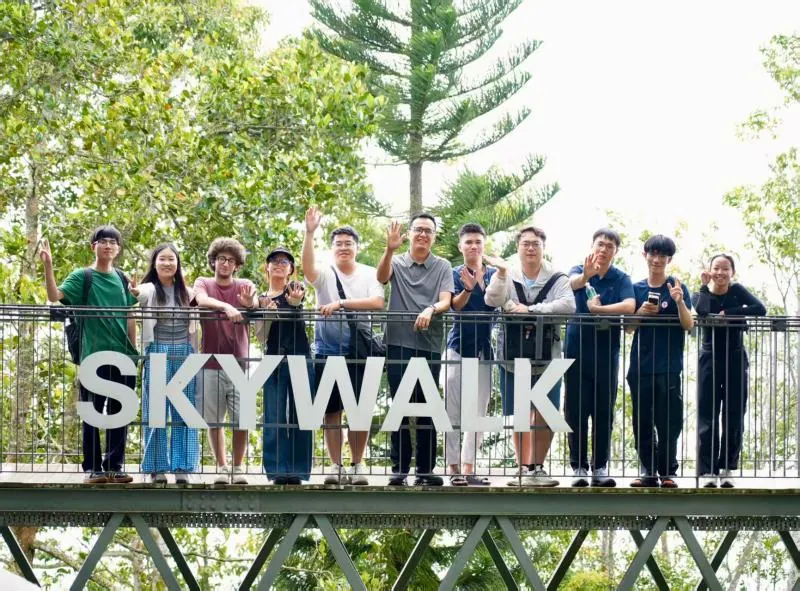
Much of the Malay Peninsula sits on karst and limestone, where underground cavities and soil loss can lead to road collapses. Muography offers a way to look inside such structures without drilling: by comparing the cosmic-ray muon flux with and without an overlying object, the density distribution inside can be reconstructed — a “CT scan” of the ground. The detectors used on the trip derive from technology developed for the Muon g-2 and muEDM experiments and were re-engineered by the TDLI Muon Tech Lab for outdoor use: portable, easy to assemble, and resistant to heat, humidity and dust.
The team carried out three field campaigns:
- Air-raid shelter, Universiti Sains Malaysia (USM) — the first demonstration measurement in a real building in Malaysia, used to test detector deployment, data taking and site conditions.
- Perak Cave, Ipoh — measurements in a limestone cave with karst cavities and rockfall risk, aiming to provide quantitative data on rock stability for hazard prevention and visitor safety.
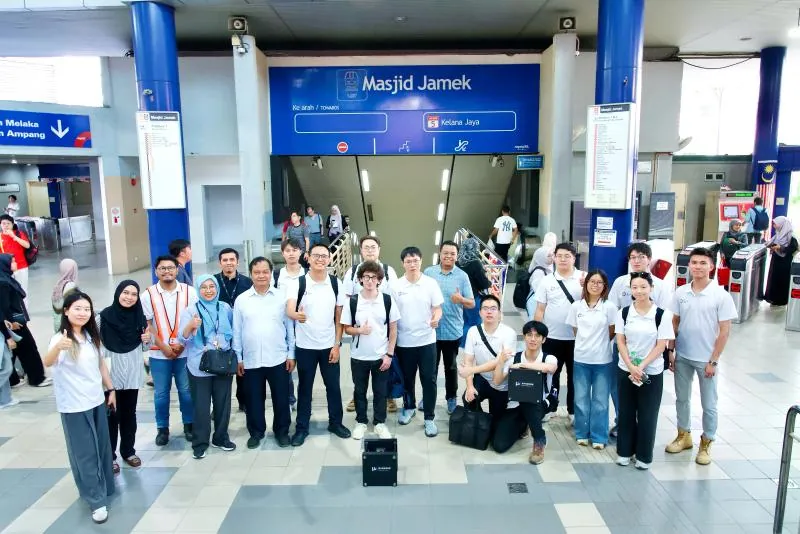
- Around Masjid Jamek station, Kuala Lumpur — preliminary tests and a site survey to look for potential voids and loose ground, near the area of the Jalan Masjid India road collapse, with support from Kuala Lumpur City Hall (DBKL) and Prasarana.
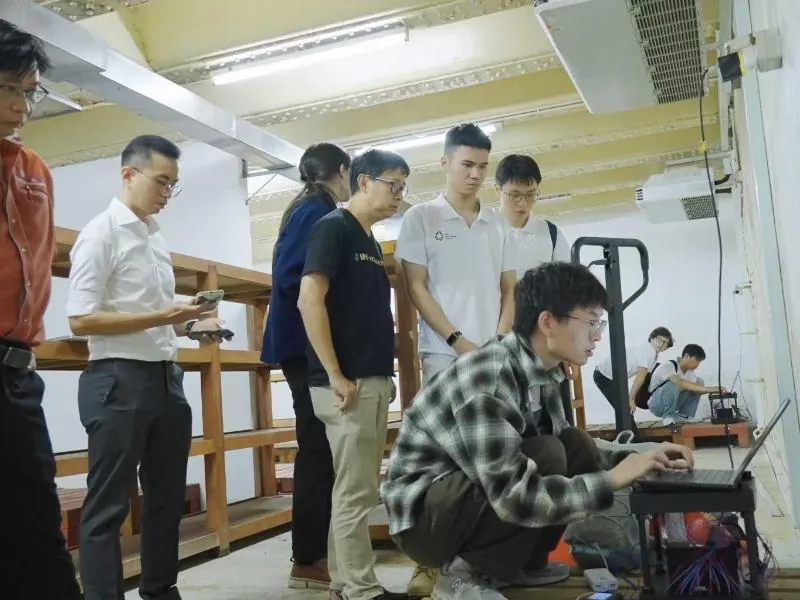
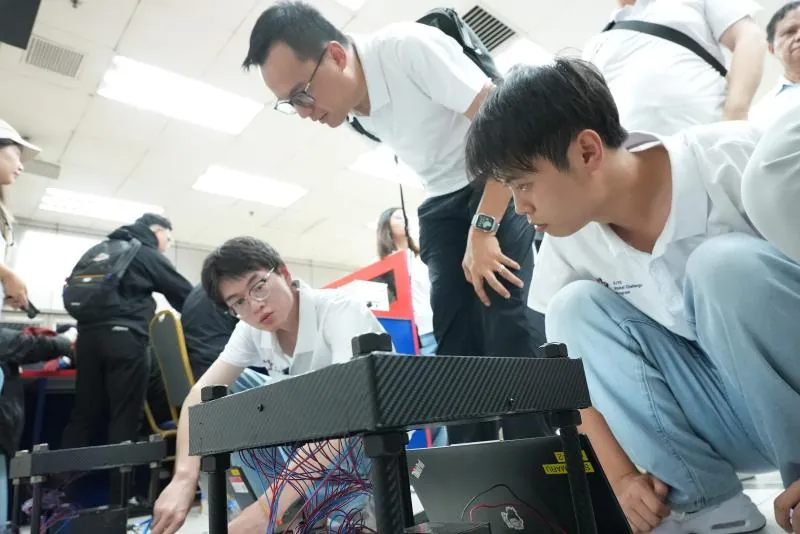
Along the way, team members gave talks and detector demonstrations on cosmic-ray physics, muon detection, data acquisition and image analysis at USM, Universiti Malaya (UM), Xiamen University Malaysia (XMUM) and Universiti Teknologi Malaysia (UTM), where representatives of the Atomic Energy Licensing Board and a highway company also joined the discussions. Yonghao Zeng, Yinghe Wang, Guan Ming Wong, Peiyao Li, Zhanxu Hao, Mehdi Kaci and Xiyan Yi presented, and at Chung Ling High School in Penang — Kim Siang’s alma mater — the team gave a popular-science lecture, with Qee Enn Tai and Yifei Li sharing their experiences of studying abroad and of moving from the classroom to research.
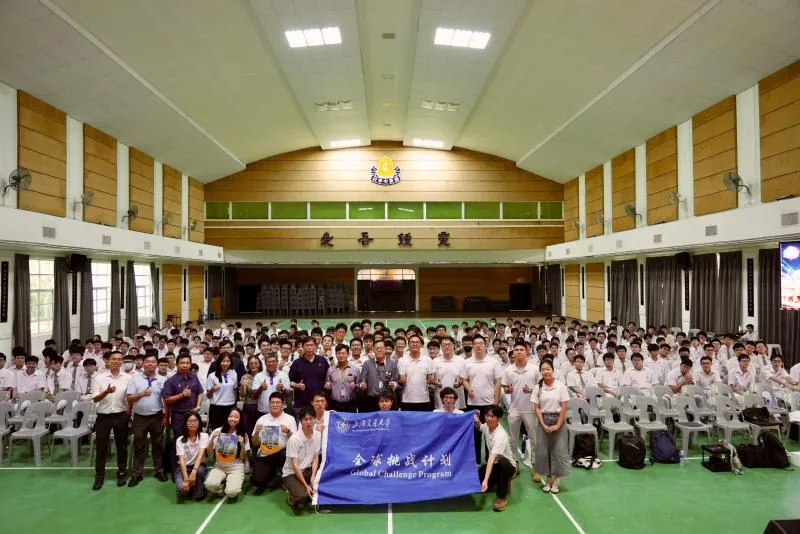
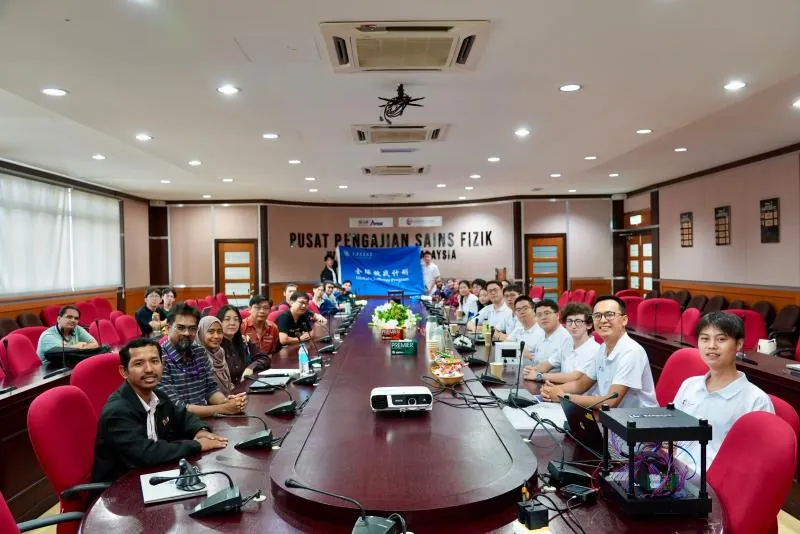
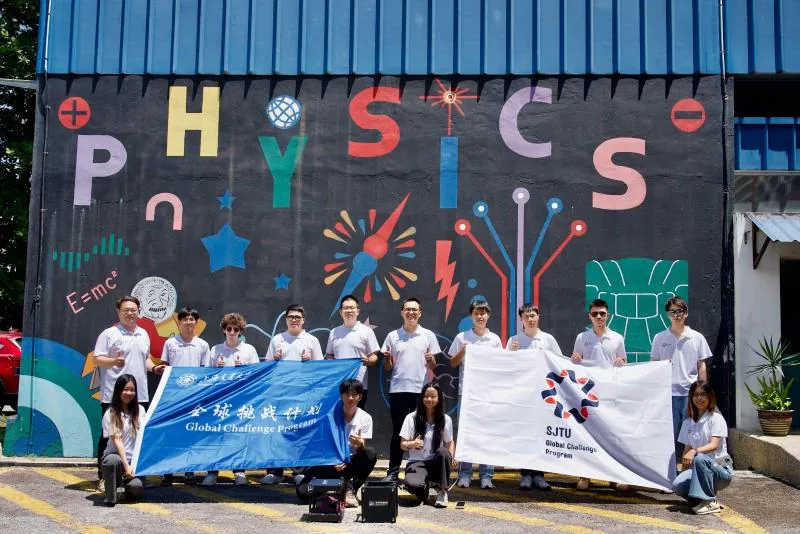
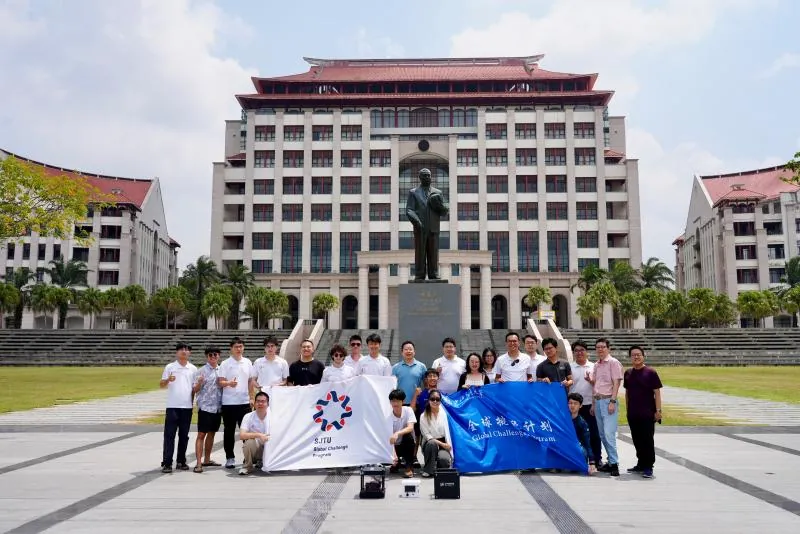
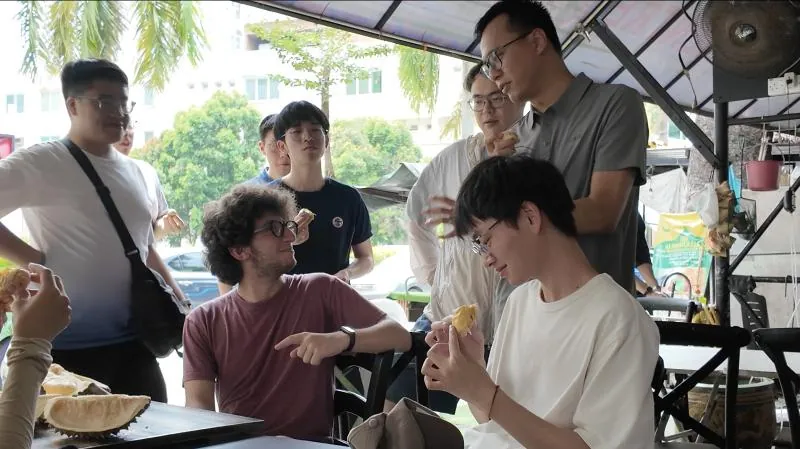
The data collected will now be analysed for density reconstruction and structural imaging. The trip also opened new collaborations: preliminary work with Prasarana on metro-tunnel safety; an initial agreement with XMUM and China Communications Construction Company (Malaysia) on applications in local infrastructure; agreement with USM and UTM on joint research; and interest from the UM Department of Physics in joint student training with TDLI. Between campaigns, the team also explored Penang’s heritage streets, the caves and karst hills of Ipoh and the Strait of Malacca — and, of course, durian and Nyonya food.
Visit reports:
- Global Challenge Program 2026: talk and detector demonstration at Chung Ling High School, Penang
- Global Challenge Program 2026: exchange and first field measurement at the USM School of Physics
- Global Challenge Program 2026: exchange at Universiti Malaya and first muon data from Kuala Lumpur
- Global Challenge Program 2026: exchange at the XMUM Department of Physics
- Global Challenge Program 2026: talks and exchange at the UTM Department of Physics
Report (in Chinese): SJTU News
2026年8月4日至11日,课题组团队依托上海交通大学2026年“全球挑战计划”(Global Challenge Program),以“缪子成像无损检测:跨国地质勘测”为项目主题,走访马来西亚半岛。团队由许金祥带队,11名学生来自李政道研究所、物理与天文学院等交大六个院系,足迹遍及槟城、怡保、吉隆坡、马六甲和柔佛。这也是课题组的便携式缪子探测器首次走出国门。
马来半岛大部分地区位于喀斯特和石灰岩地层之上,地下空洞与水土流失可能引发道路塌陷。缪子成像为无需钻探即可“透视”此类结构提供了新途径:通过比较有无遮挡物时的宇宙线缪子通量,即可重建其内部密度分布,相当于为大地做一次“CT扫描”。此行所用探测器源自缪子反常磁矩(Muon g-2)和muEDM实验中发展的技术,并由李政道研究所缪子科技实验室针对野外应用重新设计,具有便携、易组装、耐高温高湿和防尘等特点。
团队共开展了三项野外测量:
- 马来西亚理科大学(USM)防空洞——在马来西亚真实建筑中开展的首次演示性测量,用于检验探测器部署、数据采集及现场条件。
- 怡保霹雳洞(Perak Cave)——在存在喀斯特空洞和落石风险的石灰岩洞穴中开展测量,旨在为灾害防治和游客安全提供岩体稳定性的定量数据。
- 吉隆坡占美清真寺(Masjid Jamek)站周边——在吉隆坡市政厅(DBKL)和Prasarana公司的支持下,于印度清真寺路(Jalan Masjid India)道路塌陷区域附近开展初步测试和现场勘察,排查潜在空洞与松散地层。
行程中,团队成员先后在马来西亚理科大学(USM)、马来亚大学(UM)、厦门大学马来西亚分校(XMUM)和马来西亚理工大学(UTM)围绕宇宙线物理、缪子探测、数据采集与图像分析作报告并进行探测器演示,马来西亚原子能执照局及一家高速公路公司的代表也参与了交流。曾永浩、王赢鹤、黄冠铭、Peiyao Li、Zhanxu Hao、Mehdi Kaci和Xiyan Yi作了报告;在许金祥的母校——槟城钟灵中学,团队举办了科普讲座,Qee Enn Tai和李逸飞分享了海外求学以及从课堂走向科研的经历。
此次采集的数据将用于后续的密度重建和结构成像分析。此行还开辟了多项新合作:与Prasarana公司就地铁隧道安全开展前期合作;与厦门大学马来西亚分校及中国交通建设(马来西亚)公司就本地基础设施应用达成初步意向;与马来西亚理科大学和马来西亚理工大学达成联合研究共识;马来亚大学物理系也表达了与李政道研究所联合培养学生的意愿。测量间隙,团队还游览了槟城的历史街区、怡保的溶洞与喀斯特山丘以及马六甲海峡,当然也少不了品尝榴莲和娘惹美食。
各站报道:
- 2026“全球挑战计划”:项目组赴槟城钟灵中学交流
- 2026“全球挑战计划”:项目组赴马来西亚理科大学物理学院交流并开展首次实地探测
- 2026“全球挑战计划”:项目组赴马来亚大学物理系交流,获吉隆坡首批缪子数据
- 2026“全球挑战计划”:项目组赴厦门大学马来西亚分校物理系交流
- 2026“全球挑战计划”:项目组赴马来西亚理工大学物理系交流
相关报道(中文):上海交通大学新闻网